INTRODUCTION TO BIOINFORMATICS
A BEGINNER'S GUIDE
Published on: September 13, 2025
In the mid-20th century, two revolutions were unfolding in parallel. On one side, scientists were racing to uncover the secret of life hidden within our cells and they get a major breakthrough when Rosalind Franklin’s X-ray diffraction images revealed the hidden structure of DNA, enabling Watson and Crick to propose the double helix in 1953. This discovery changed biology forever, showing that a simple code of four bases carries the blueprint of every organism. But this was the dawn of a new era. Then scientists started making efforts to read these codes. Soon after, Frederick Sanger’s sequencing methods (1977) gave scientists the ability to read the code of life itself, and decades later, the Human Genome Project (1990–2003) pushed this ambition to a global scale, mapping all 3 billion bases of human DNA.
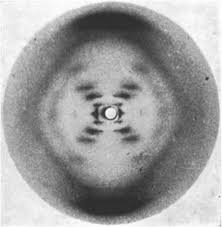
Rosalind Franklin X-ray Crystallography Image
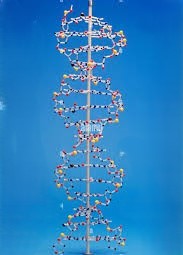
Watson and Crick Double Helix Model
Meanwhile, in the world of machines, computers were rapidly evolving. All the way from Alan Turing’s early theories of computation (1930s–40s) to the rise of mainframes and supercomputers in the 1960s and 70s, and followed by the development of advanced algorithms and data storage systems. As biology began producing mountains of genetic and protein data, scientists realized that traditional lab notebooks were no longer enough. The challenge of handling this vast information was beyond the walls of biological laboratory. This was the time when eyes of biological world turned towards the power of computation.

Universal Turing Machine

Modern Supercomputers
When these two opposite streams — Nature made machines decoding life and man-made machines’ computational power, intersected, a new field was born: bioinformatics. It became the bridge between biology and computing, transforming raw sequences into knowledge, and enabling breakthroughs in medicine, agriculture, and biotechnology.
What is Bioinformatics?
“Bioinformatics is an interdisciplinary science that combines biology, computer science, mathematics, and statistics to analyse and interpret biological data.”
It provides the tools and methods necessary to handle the massive data produced by modern biological research, such as DNA sequencing, protein analysis, and large-scale clinical studies. In simpler terms, bioinformatics answers questions like:
- What does this DNA sequence mean?
- How do proteins fold and interact?
- Which genes are linked to a particular disease?
- Can we predict how a patient will respond to a drug?
Why is Bioinformatics Important?
Biology has shifted from being a “data-poor” to a data-rich science. With technologies like Next-Generation
Sequencing (NGS), researchers can sequence an entire human genome in just a few days, generating terabytes of data.
Bioinformatics turns this raw data into biological knowledge.
For example:
- In COVID-19 research, bioinformatics was used to track viral mutations worldwide.
- In cancer genomics, it helps identify mutations in tumor cells and guides personalized therapies.
- In agriculture, bioinformatics improves crop yield and disease resistance by studying plant genomes.
Goals of Bioinformatics
- Data Storage & Retrieval –
- Sequence Analysis –
- Structure Prediction –
- Systems-Level Understanding –
- Translational Applications –
Managing large biological databases (e.g., GenBank, UniProt).
Comparing DNA/protein sequences to identify functions and evolutionary relationships.
Modeling 3D structures of proteins and RNAs.
Studying networks of genes and proteins in pathways.
Applying insights to medicine, drug discovery, and biotechnology.
Core Applications of Bioinformatics
-
Sequence Analysis (Genomics)
- What it is: Comparing DNA, RNA, or protein sequences.
- Why it matters: Identifies mutations, evolutionary relationships, and conserved functional regions.
- Methods & Tools:
- BLAST – Compare a query sequence to known databases.
- Clustal Omega, MUSCLE – Multiple sequence alignment.
- Gene Prediction Tools – AUGUSTUS, GENSCAN.
- Example: Detecting mutations in the BRCA1 gene linked to breast cancer risk.
-
Functional Genomics (Transcriptomics)
- Goal: Understand how genes and proteins function in biological systems.
- Why it matters: Links genetic variations to diseases and traits.
- Techniques:
- RNA-Seq – Measures gene expression levels.
- ChIP-Seq – Studies DNA-protein interactions.
- ATAC-Seq – Identifies open chromatin regions.
- Projects:
- ENCODE – Cataloging functional elements in the human genome.
- GTEx – Mapping tissue-specific gene expression.
- Applications: Understanding diseases like diabetes or Alzheimer’s by identifying dysregulated genes.
-
Structural Bioinformatics (Proteomics)
- What it studies: 3D shapes of proteins and nucleic acids.
- Importance: Structure determines biological function.
- Tools & Databases:
- PDB (Protein Data Bank) – Repository of 3D structures.
- SWISS-MODEL, AlphaFold2 – Structure prediction.
- AutoDock – Drug-protein docking simulations.
- Example: Predicting the 3D structure of the SARS-CoV-2 spike protein, aiding vaccine design.
-
Drug Discovery and Pharmacogenomics
- How bioinformatics helps:
- Identifies drug targets (proteins/genes involved in disease).
- Simulates drug binding to proteins.
- Studies how genetic variations affect drug response.
- Databases: DrugBank, PubChem, ChEMBL.
- Case Study: Development of Gleevec (imatinib) for leukemia by targeting specific mutated kinases.
- How bioinformatics helps:
-
Systems Biology & Metabolomics
- Focus: Entire networks rather than single molecules.
- Methods:
- Metabolic pathway modeling (KEGG, BioCyc).
- Protein-protein interaction networks (STRING).
- Gene regulatory networks.
- Goal: Predict cell behavior under different conditions.
- Example: Modeling cancer signaling pathways to identify new therapeutic targets.
- Metabolomics: Profiling small molecules in cells and tissues to study metabolic pathways, often integrated with systems biology for a complete picture.
-
Phylogenetics
- What it is: Reconstructing evolutionary relationships among species using genetic data.
- Tools: MEGA, PhyML, BEAST.
- Applications: Understanding species evolution, tracking viral outbreaks, and studying gene family evolution.
Emerging Frontiers in Bioinformatics
As technology advances, new frontiers in bioinformatics are emerging:
- Single-Cell Genomics: Analyzing gene expression at the single-cell level to understand cellular heterogeneity.
- Multi-Omics Integration: Combining genomics, transcriptomics, proteomics, and metabolomics data for a holistic view of biological systems.
- AI and Machine Learning: Using advanced algorithms to predict protein structures (e.g., AlphaFold2), analyze medical images, and discover new drugs.
- Cloud Computing & Big Data: Leveraging cloud platforms to store and analyze massive biological datasets efficiently.
Bioinformatics Workflow
A typical bioinformatics workflow involves several key steps:
- Collecting Raw Biological Data –
- DNA sequencing data (e.g., FASTQ files from Illumina, Oxford Nanopore)
- Protein sequences (from experiments or mass spectrometry)
- Gene expression data (microarrays, RNA-Seq)
- RNA-Seq data (gene expression levels)
- Metabolomics & proteomics data (chemical compounds, proteins)
- Medical imaging (X-rays, MRI, pathology slides)
- Preprocessing –
- Quality control (remove low-quality reads, adapters) → tools: FastQC, Trimmomatic
- Filtering & trimming (eliminate contamination, duplicates)
- Error correction (fix sequencing errors)
- Normalization (for gene expression / RNA-seq data)
- Feature extraction (convert raw signals/images into usable biological features)
- Storage in Databases –
- Primary sequence databases → GenBank, ENA, DDBJ
- Protein databases → UniProt, PDB (structures)
- Functional databases → KEGG (pathways), Reactome
- Specialized databases → dbSNP (mutations), GEO (gene expression)
- Big data storage → Cloud platforms (NCBI SRA, EMBL-EBI, AWS cloud genomics)
- Analysis –
- Sequence Alignment
- Pairwise alignment → BLAST, FASTA
- Multiple sequence alignment → Clustal Omega, MUSCLE
- Phylogenetic trees → MEGA, PhyML
- Modeling
- Protein structure prediction → AlphaFold, SWISS-MODEL
- Molecular docking → AutoDock, PyRx
- Systems modeling → COPASI, CellDesigner
- Networks
- Gene regulatory networks
- Protein-protein interaction networks → STRING, Cytoscape
- Metabolic & signaling pathway modeling
- Interpretation –
- Detect mutations / SNPs linked to diseases
- Find biomarkers from gene expression
- Map genes/proteins to biological pathways
- Compare with known databases for clinical relevance
- Apply machine learning models for classification/prediction
- Biological Insight –
- Diagnostics → Early detection of cancer, genetic diseases
- Therapies → Personalized medicine, drug discovery
- Knowledge → Understanding evolution, systems biology, functional genomics
- Decision-making → Guiding clinical and research experiments
Careers in Bioinformatics:
- Bioinformatics Scientist/Researcher – Builds new algorithms and pipelines.
- Bioinformatics Analyst – Processes NGS or proteomics datasets.
- Computational Biologist – Creates predictive models of systems.
- Software Developer – Designs bioinformatics software tools.
- Clinical Bioinformatician – Works in hospitals, analyzing patient genomes.
- Programming: Python, R, Perl, C++.
- Databases: SQL, NoSQL, biological repositories.
- Machine Learning & Statistics.
- Biological Knowledge: Molecular biology, genetics, genomics.
- Platforms: Linux/Unix, cloud computing (AWS, Google Cloud).
Conclusion:
Bioinformatics is the backbone of modern biology and medicine. It transforms massive data into discoveries—whether it’s mapping the human genome, predicting drug responses, or modelling entire cellular systems. For a newcomer, bioinformatics offers:
- A solid career path across academia, pharma, biotech, and healthcare.
- Opportunities to work on real-world problems like cancer, genetic disorders, and pandemics.
- A future-proof skill set, blending coding with biology.
As biological data keeps growing, bioinformatics will continue to revolutionize genomics, healthcare, agriculture, and biotechnology, making it one of the most powerful fields of the 21st century.
🧬 Decode, Discover, Deliver! 🧬